Intwo operates as the Microsoft delivery partner for Arizona enterprises that have exited the pilot phase and require production-grade execution across Azure, Dynamics 365, Data and AI, Modern Workplace, and Cybersecurity. Two decades of engineering practice, Azure Expert MSP status, and full Microsoft Solutions Partner designations underpin every engagement. As Microsoft Gold Partners in Arizona, our clients include semiconductor supply chain manufacturers, logistics operators moving freight through Phoenix and Tucson, real estate portfolios scaling across the Valley, retail networks expanding into adjacent metros, and professional services firms managing multi-state regulatory complexity. Engagement scope is defined by measurable business outcomes, cost reduction, close-cycle acceleration, security posture improvement, or revenue enablement, and governed against those outcomes throughout delivery.
Arizona’s operating environment rewards precision. Semiconductor fabrication, aerospace, mining, and advanced manufacturing enforce tolerances where downtime translates directly into lost yield. Intwo’s Microsoft-certified architects, engineers, and functional consultants design and operate to that standard. As a Microsoft Gold Partner in Arizona with global Business Applications Inner Circle recognition, Intwo combines hyperscale operations discipline with sector-specific knowledge earned across manufacturing, distribution, real estate, retail, and professional services engagements. Proximity to Microsoft’s West US 3 Azure region in Phoenix provides Arizona customers with latency, sovereignty, and disaster recovery configurations that materially strengthen workload placement decisions. Whether the mandate is consolidating legacy ERP estates, embedding Copilot into operations, or hardening the environment against an active threat surface, Intwo designs, builds, and runs the stack end-to-end.

Intwo delivers end-to-end Managed Azure services across IaaS, PaaS, and SaaS estates, architected on the Azure Well-Architected Framework and governed by continuous FinOps discipline. As Microsoft Gold Partners in Arizona, Intwo builds landing zones, executes migrations, and operates the environment through defined SLAs, spanning monitoring, patching, backup, recovery, and 24×7 incident response. Governance, security, and compliance controls (HIPAA, PCI DSS, SOC 2, CMMC) are engineered into configuration from day one. Proximity to Microsoft’s West US 3 region in Phoenix strengthens latency, sovereignty, and disaster recovery outcomes for Arizona workloads. FinOps engagements routinely reclaim 20 to 40 percent of prior Azure spend, validated against Microsoft invoices. Internal teams retain focus on differentiated work while Intwo operates the platform to measurable service metrics.

Dynamics 365 forms the operational backbone for Arizona enterprises managing finance, supply chain, commerce, customer service, field service, project operations, and human resources. As a recognized Microsoft inner circle partner in Arizona, Intwo executes full-lifecycle implementations grounded in Microsoft’s Success by Design framework. Every engagement opens with a written value case tied to a measurable operating metric: cost to serve, working capital, order-to-cash cycle time, close-cycle days, or first-time-fix rate. Customization is disciplined, evaluated against out-of-the-box capability, cost of divergence, and long-term upgrade paths. Integration extends into Azure, Fabric, Power Platform, Teams, and Copilot. Delivery spans assessment, licensing optimization, data migration, hypercare, and long-run managed support. Clients scale from a single module to phased multi-country rollouts against the original value case.

Arizona employers compete for talent against Seattle, the Bay Area, Austin, and Denver, markets that reject rigid, location-bound operating models. Distributed teams, hybrid schedules, contractor networks, and post-merger integrations demand a collaboration and identity fabric that outpaces traditional endpoint management. As a certified Microsoft delivery partner, Intwo engineers Modern Workplace environments across Microsoft 365, Entra ID, Intune, Defender for Endpoint, Purview, SharePoint, OneDrive, Teams, Viva, and Microsoft 365 Copilot. Zero Trust principles (conditional access, device compliance, application controls, data loss prevention, information protection) are configured as a coherent policy set from initial rollout. Adoption is treated as an engineering deliverable, supported by structured enablement, role-based playbooks, and usage telemetry that grounds every license, add-on, and Copilot expansion decision in evidence.

The divide between Arizona enterprises that treat data as an operating asset and those that treat it as an IT byproduct widens every quarter. Boards demand AI-enabled forecasting, real-time margin visibility, and defensible narratives on generative AI’s operational impact. Intwo delivers a structured Data and AI practice built on Microsoft Fabric, Azure AI Foundry, Azure Machine Learning, Power BI, Copilot Studio, and Microsoft 365 Copilot. Every engagement opens with an AI Business Scan that inventories data assets, quality gaps, and candidate initiatives, then applies value-versus-feasibility scoring. Data foundations follow: lakehouse or warehouse architectures on Fabric, semantic models, Purview-governed lineage, and MLOps pipelines where predictive models apply. Outcomes span demand forecasting, dynamic pricing, tenant intelligence, and utilization forecasting, each instrumented against the original business metric.

Sustainability reporting has moved from public relations to audit evidence. Publicly traded Arizona companies, CSRD-obligated subsidiaries, and Fortune 500 suppliers face tightening deadlines on Scope 1, 2, and 3 emissions, water, and waste disclosures. As a Microsoft inner circle partner in Arizona, Intwo implements Microsoft Sustainability Manager as an operational platform, connecting utility feeds, ERP data, travel and expense systems, supplier data, and facility telemetry into a single reporting fabric. Calculation models align to the GHG Protocol and adjacent methodologies. Power BI dashboards deliver board-level visibility. For Arizona operations where water intensity is material (semiconductor fabrication, data centers, agriculture-adjacent supply chains, hospitality), site-level water accounting reflects actual use, discharge, and reclamation. Sustainability, finance, and operations teams own the platform post go-live.

The threat surface facing Arizona organizations has escalated materially. Ransomware, identity-driven attacks, supply chain compromise, and AI-generated social engineering are striking mid-market and enterprise targets previously considered outside attacker scope. Regulatory pressure has intensified in parallel: CMMC 2.0, SEC cyber disclosure rules, HIPAA enforcement, state breach notification statutes, and cyber insurance underwriting all raise the evidentiary bar. As trusted Microsoft Gold Partners in Arizona, Intwo consolidates fragmented tooling onto the integrated Microsoft Security stack (Defender XDR, Sentinel, Entra, Purview, Intune, Defender for Cloud) with measurable reductions in mean time to detect and respond. Engagements begin with a Cybersecurity Scan producing a risk-prioritized roadmap. Delivery spans Zero Trust architecture, identity hardening, SIEM and SOAR on Sentinel, and 24×7 managed detection and response through Intwo’s Security Concierge service.

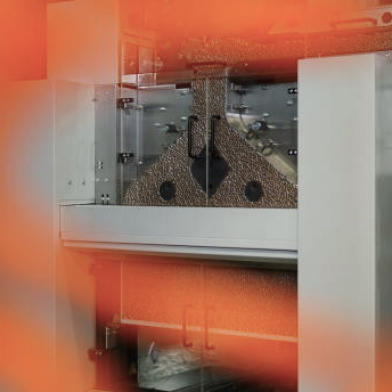
In the information age, the companies that are most successful are the ones that look after their data. Scandinavian Tobacco Group (STG), knew how important data is and wanted more control than their existing on-premises setup could provide; so they joined with InTWO and made it happen.
How they did it

Truly making the customer the center of their universe, HappyMe, the FIRST digital loyalty solution for retail in the region, builds on Géant’s core growth principles: customer focus and innovation. The solution has helped the retail leader adopt an insight–driven approach to serving and rewarding its customers.
Focus, focus..

In the initial years, Techmart juggled with several siloed business applications until they realized the benefit of having one integrated system and zeroed in on Microsoft Dynamics.
A fundamental turn
Slow Azure migrations can put manufacturing at risk. Discover a 90-day roadmap to protect production, strengthen OT security, and cut migration risk.

Ransomware can cost manufacturers far more than the ransom. Discover how downtime, lost revenue, working capital, and recovery gaps impact the bottom line.
It refers to a Microsoft-recognized services firm authorized to design, deploy, and manage Microsoft cloud technologies for enterprises across the state. The Gold designation itself was retired in 2022 and replaced by the Microsoft Solutions Partner program, which is the current qualification standard. We hold every Microsoft Solutions Partner designation, Azure Expert MSP status, and global Business Applications Inner Circle recognition. For Arizona clients, that translates into certified engineering depth across Azure, Dynamics 365, Data and AI, Modern Workplace, and Cybersecurity, backed by direct escalation into Microsoft product teams when complex issues need fast resolution.
Arizona’s industrial base spans semiconductor fabrication, aerospace, mining, healthcare, and hospitality, sectors with operating characteristics that generic national delivery models often underestimate. A locally engaged partner brings understanding of regional talent markets, data center geography including the Azure West US 3 region in Phoenix, and industry-specific compliance obligations such as CMMC for defense supply chains. We combine that regional awareness with global delivery scale, providing contextual insight without sacrificing the engineering depth, methodology, and 24×7 operations coverage that only a mature international Microsoft practice can sustain across multi-year commitments.
These partners deliver across the full Microsoft cloud portfolio. Our practice covers Managed Azure services including migration, FinOps, governance, and 24×7 operations; Dynamics 365 implementation and support across Finance, Supply Chain, Commerce, Customer Service, Field Service, and Project Operations; Data and AI programs on Microsoft Fabric, Azure AI Foundry, and Copilot; Modern Workplace deployments on Microsoft 365 with Zero Trust identity and endpoint controls; and Cybersecurity engagements on Defender XDR, Sentinel, Entra, and Purview. Sustainability reporting on Microsoft Cloud for Sustainability rounds out the portfolio for ESG-obligated organizations.
The Microsoft Business Applications Inner Circle is a recognition awarded annually to approximately the top one percent of Microsoft partners globally, based on measurable customer outcomes, sales performance, and delivery excellence. It provides direct access to Microsoft product engineering, early roadmap visibility, and priority escalation paths for complex issues. As a Microsoft inner circle partner in Arizona, we have earned this recognition consistently through Dynamics 365 outcomes across manufacturing, distribution, retail, real estate, and professional services. For enterprises planning multi-year Dynamics 365 investments, working with an Inner Circle partner materially reduces execution risk on the most consequential parts of the estate.
Five sectors align most closely with the state’s economic base and consistently produce strong Microsoft cloud outcomes: manufacturing, including semiconductor supply chains and advanced industrial operations; logistics and distribution across freight, warehousing, and last-mile networks; retail spanning omnichannel commerce and specialty formats; real estate covering commercial, residential, and hospitality portfolios; and professional services including consulting, legal, engineering, and accounting firms. Our practice concentrates on these five industries, combining Microsoft technology depth with sector-specific process libraries, benchmarks, and reference architectures developed across two decades of implementations in North America, Europe, and the Middle East.
A disciplined Microsoft partner applies FinOps engineering rather than surface-level cost dashboards. We begin with a full estate assessment covering compute rightsizing, reserved instance and savings plan optimization, storage tier alignment, network egress patterns, license mobility, and orphaned resource cleanup. A continuous optimization cadence follows, tied to workload owners and finance, so cost is managed with the same rigor as revenue and margin. Arizona clients typically recover 20 to 40 percent of prior Azure spend within the first two optimization cycles, validated against Microsoft invoices rather than modeled in forward-looking projections.
For most Arizona organizations, the Azure West US 3 region in the Phoenix metro area is the primary deployment target, offering the lowest latency to Arizona users and strong sovereignty positioning for state-resident workloads. Paired regions in West US 2 provide disaster recovery capacity, and additional regions such as West US and South Central US may serve specific compliance, cost, or availability zone strategies. Landing zone design should make these regional decisions against explicit criteria, including latency, resilience, cost, data residency, and compliance obligations, rather than defaulting to convenient choices during migration planning.
A well-run Dynamics 365 implementation follows Microsoft’s Success by Design framework across five phases: initiate, implement, prepare, operate, and optimize. It opens with a written value case tied to measurable operational metrics such as close-cycle days or first-time-fix rate, then moves through functional design workshops, iterative sprint delivery, data migration, integration into the wider Microsoft estate, and hypercare. Our delivery blueprint stays anchored to the original value case throughout. Post go-live, our managed Dynamics practice runs environment operations, minor enhancements, and continuous release adoption so the platform stays current with Microsoft’s wave releases.
Copilot succeeds or fails on data hygiene, permissions, and information architecture rather than on the technology itself. A standard Microsoft 365 rollout focuses on licensing, provisioning, and adoption. Copilot requires all of that plus a readiness assessment covering SharePoint and OneDrive permissions, sensitivity labeling, and any unresolved access sprawl that Copilot will otherwise surface immediately. We sequence Copilot deployments by persona and workload against defined productivity outcomes, with change management, training, and adoption telemetry treated as core deliverables so leadership sees value in evidence rather than in generic vendor claims.
Arizona organizations face a range of frameworks depending on sector: HIPAA and HITRUST for healthcare, PCI DSS for payment environments, SOC 2 for service organizations, CMMC 2.0 for defense industrial base suppliers, ISO 27001 for international operations, SEC cyber disclosure rules for public issuers, and state breach notification statutes. We engineer control mappings directly into Microsoft cloud configurations across Azure Policy, Defender for Cloud, Purview, and Sentinel analytics, so audit evidence generates as a byproduct of daily operations. Alignment is built in from landing zone design onward, minimizing remediation cycles under audit pressure.
An Inner Circle partner operates within the top one percent of Microsoft partners globally, with escalation pathways, product engineering access, and roadmap visibility that are not available to the wider partner ecosystem. In practice, that translates into faster resolution of complex Dynamics and Power Platform issues, earlier readiness for upcoming platform features, and a delivery track record independently validated by Microsoft against measurable customer outcomes. For clients making multi-year Dynamics 365 commitments, this partner tier materially reduces execution risk on the most consequential parts of the estate.
A structured Azure migration opens with discovery: application dependency mapping, performance baselining, licensing analysis, and total cost of ownership modeling. A landing zone aligned to the Cloud Adoption Framework follows, workloads are sequenced by risk and value, and migration waves are executed using Azure Migrate, Azure Site Recovery, Database Migration Service, and application refactoring where appropriate. Cutover planning, rollback procedures, and post-migration optimization are standard blueprint components. Governance, cost management, and security controls are established before workloads land, so the estate is defensible and cost-managed from day one of production operations.
Enterprise-grade managed operations run through defined service catalogs, contractual SLAs, and integrated toolchains rather than reactive ticket queues. Our follow-the-sun operations model spans global delivery centers, covering continuous monitoring, incident response, change management, patching, backup verification, and reporting. Customers view the same operational metrics we do through shared dashboards, and monthly service reviews cover SLA performance, incident trends, capacity planning, and cost movement. The model releases internal IT teams to focus on business-facing work while the platform runs to measurable service levels that stand up under executive and auditor scrutiny.
The threat surface has escalated materially. Ransomware, identity-driven attacks, supply chain compromise, and AI-generated social engineering are striking mid-market and enterprise targets previously considered outside attacker scope. Regulatory pressure has intensified in parallel through CMMC 2.0, SEC cyber disclosure rules, HIPAA enforcement, and cyber insurance underwriting. We now build security into landing zone architecture, Dynamics deployments, Modern Workplace rollouts, and data platforms from day one, spanning Zero Trust design, identity hardening, Defender protection, Sentinel-based SIEM and SOAR, Purview governance, and 24×7 managed detection and response through our Security Concierge service.
Data governance is treated as a foundational engineering discipline. We deliver governance through Microsoft Purview for cataloging, lineage, classification, and data loss prevention; Fabric for unified analytics governance; and Entra ID for identity-based access controls. The governance model is designed against the organization’s regulatory obligations and data sensitivity, with automated classification, protection labels, and stewardship workflows built to survive personnel changes. The result is a data environment where analytics, AI, and reporting can accelerate without compounding the risk surface each time a new dataset enters the estate.
Yes. Sustainability reporting is fundamentally an operational data problem, and Microsoft Sustainability Manager, part of Microsoft Cloud for Sustainability, provides a defensible system of record for Scope 1, 2, and 3 emissions along with water and waste accounting. We connect utility feeds, ERP data, travel and expense systems, and supplier data into a unified reporting fabric. Calculation models align to the GHG Protocol and adjacent methodologies, with outputs feeding Power BI dashboards for board reporting. For Arizona operations where water intensity is material, site-level water accounting reflects actual use, discharge, and reclamation.
Copilot rollouts fail more often on readiness than on technology. Before deployment, businesses should audit SharePoint and OneDrive permissions, sensitivity labels, and Microsoft 365 licensing posture, because Copilot surfaces any unresolved access sprawl immediately. Our approach begins with a Copilot readiness assessment, followed by persona-based sequencing tied to defined productivity outcomes. Change management, training, and adoption telemetry are treated as core deliverables, so leadership sees demonstrated value rather than generic vendor claims. Access to Microsoft product engineering through Inner Circle recognition helps resolve deployment complexity faster than typical partner channels allow.
Engagement models are shaped to fit the client’s operating rhythm. Common structures include fixed-price project delivery for defined implementations, time-and-materials for advisory and enhancement work, and managed services contracts with defined SLAs for ongoing operations. Every engagement opens with a written value case, executive steering cadence, transparent status reporting, and defined success criteria. We assign a client partner and delivery lead accountable for outcomes end-to-end, so escalation paths remain clear and commercial and delivery decisions can be made without organizational friction on either side of the relationship.
Timelines vary by scope but follow predictable ranges when delivery is disciplined. Landing zone builds and initial Azure migrations for mid-market estates typically run twelve to twenty weeks. Dynamics 365 Business Central implementations run four to six months for a single-country scope; Finance and Supply Chain Management programs run six to twelve months depending on complexity and integration surface. Modern Workplace and Copilot rollouts run eight to sixteen weeks. Serious partners commit to timelines in writing against defined scope, resource loading, and dependency assumptions, and manage variance transparently rather than absorbing it silently within status decks.
Engagements begin with a discovery conversation where our leadership meets with your executive stakeholders to understand the current estate, the outcomes requiring movement, and the commercial, regulatory, and organizational constraints in play. Scope typically settles into one of three entry points: an assessment (AI Business Scan, Cybersecurity Scan, Azure cost review, or Dynamics readiness), a defined implementation, or a managed services onboarding. Selecting a Microsoft delivery partner is a boardroom-level decision, and we approach the first conversation accordingly. Contact us to schedule an executive briefing with the Arizona practice team.